

Losing a tooth or living with one too damaged to save affects more than just your smile. Dr. Faranak Khasraghi, DDS, DMD, known to her patients as Dr. K, has spent over 20 years helping people regain full dental function through solutions like implant-supported crowns and bridges. At County Center Dental Group, Dr. K combines advanced training with a genuine commitment to patient care, giving you a restoration that feels stable, looks natural, and supports your long-term oral health.
Implant-Supported Crowns & Bridges
The Risks of Leaving a Missing Tooth Untreated
Many people put off treating a missing tooth because it doesn’t hurt. That absence of pain doesn’t mean nothing is happening. It just means the damage is happening quietly. Beneath the surface, your jawbone is already beginning to shrink. Without a tooth root to stimulate it, the bone in that area starts to deteriorate within the first few months, a process that gradually affects the shape of your jaw and face over time.
At the same time, the teeth surrounding the gap don’t stay put. They begin to shift and tilt toward the empty space, disrupting your bite alignment. That misalignment creates uneven pressure across your jaw, which can lead to difficulty chewing, worn enamel, and joint discomfort. The longer a missing tooth goes untreated, the more these issues compound, making restoration more complex and costly down the line. Implant-supported crowns and bridges intervene at the source, replacing both the visible tooth and the root function beneath it to stop this cycle before it progresses.

Which implant-supported restoration is right for you?
Not every missing tooth situation calls for the same fix. The sections below cover the two implant-supported options available and who each one is built for.
Risks of Delaying Implant-Supported Restoration Treatment
Once a missing tooth has been diagnosed, moving forward with treatment matters just as much as the diagnosis itself. The benefits above depend on placing your restoration before more bone or tooth structure is lost. The sections below cover what further delay can cost you and how County Center Dental Group addresses each concern.
Health Risk of Continued Delay
Bone loss around a missing tooth does not reverse on its own, and it can continue even after you’ve decided to move forward with treatment. Waiting longer can also allow neighboring teeth to shift further, complicating the fit of your future restoration. County Center Dental Group uses X-rays or 3D scans to track your bone health and timing so treatment starts while your options are still straightforward.
Financial Risk of Waiting on Treatment
The longer a missing tooth goes unaddressed, the more bone volume you may lose, which can mean needing a bone graft before an implant can even be placed. Moving forward sooner can help you avoid that additional step and cost. County Center Dental Group accepts most PPO plans and offers financing through Cherry and CareCredit to help make treatment manageable.
Safety Risk of an Unstable Bite
As neighboring teeth continue to shift into the gap left by a missing tooth, your bite can become less stable, which places uneven pressure on your jaw and remaining teeth over time. County Center Dental Group schedules follow-up visits after your restoration is placed to confirm your bite is functioning as it should.
Why Choose Us
Dr. Faranak Khasraghi holds a DDS from Shiraz University School of Dental Science and a DMD from the University of Pennsylvania School of Dental Medicine, two degrees from two distinct institutions with different clinical standards and training philosophies. For a procedure as precise and multi-phased as implant-supported restorations, that breadth of academic foundation matters. It shapes how she assesses each case, plans treatment, and executes every step with consistency.
She has also completed advanced training through the Dawson Academy and the United States Dental Institute, keeping her approach current and technique-driven. With over 20 years of experience and recognition as America’s Top Dentist, Dr. K brings a level of clinical depth that gives patients confidence in both the process and the outcome.


Reclaim Full Function With Our Implant-Supported Crowns & Bridges!
Getting a stable, natural-looking restoration starts with one conversation with the right dentist. Dr. Faranak Khasraghi has the training, experience, and clinical precision to make sure your implant-supported crown or bridge is placed correctly and built to last. At County Center Dental Group, every treatment decision is made with your long-term oral health in mind, not just the immediate result.
Book your consultation by reaching our team at 703.670.4888 or check us out on Facebook to see patient results, get answers to common questions, and stay up to date on everything happening at the practice. Your next step is closer than you think.
FAQs
What is an implant supported crown?
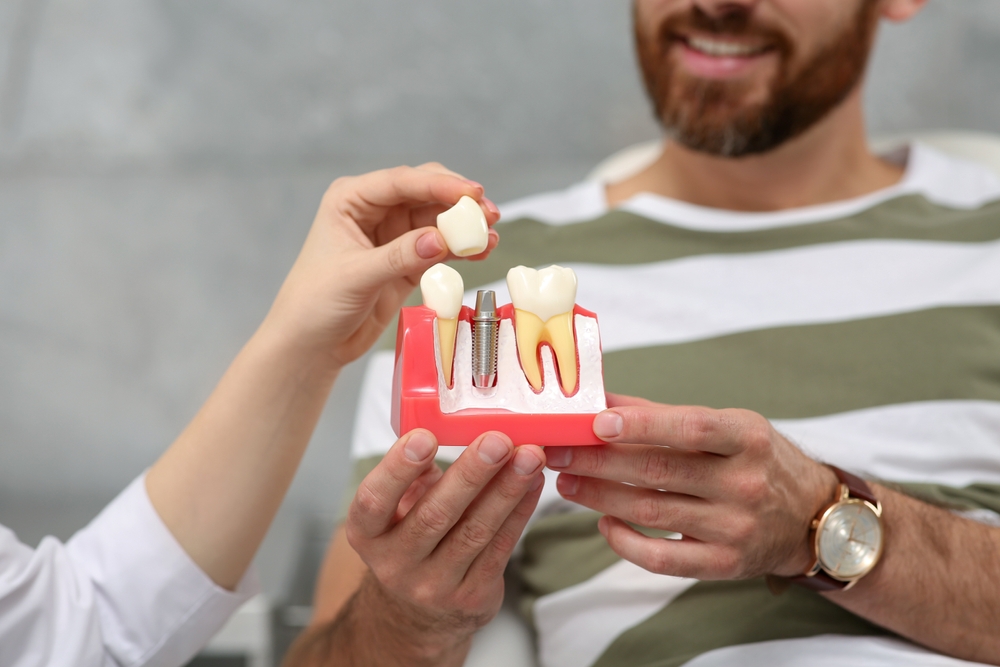
An implant-supported crown is a dental restoration that replaces a single missing tooth by attaching a custom-made crown directly to a dental implant in your jawbone. Unlike a traditional crown, which sits over a damaged natural tooth, this type is fully supported by the implant beneath it. The result is a stable, permanent-feeling tooth that functions and looks like the real thing.
Do implant supported crowns use abutments?
Yes, implant-supported crowns do use abutments. These are small connector pieces that attach to the top of the implant and provide a stable base for the crown. The abutment is placed once the implant has fully integrated with the jawbone, and the crown is then secured on top of it. This system creates a strong, reliable connection that allows your restoration to withstand normal chewing forces.
How much do implant supported crowns cost?
The cost of an implant-supported crown varies depending on factors like the number of implants needed, the materials used, and the complexity of your case. On average, patients can expect costs to include both the implant placement and the crown fabrication, which are often billed separately. We recommend scheduling a consultation so we can provide a personalized estimate and review any available financing options.
How long do implant-supported bridges last?
Implant-supported bridges are built to be long-lasting, and with proper care, they can last 15 years or more. Many patients keep them for decades. The implants themselves, when well-maintained, can last a lifetime because they fuse with the jawbone and become a permanent part of your oral structure. Regular dental visits, good hygiene habits, and avoiding excessive force on the restorations all play a role in their longevity.
How much is an implant supported bridge?
The cost of an implant-supported bridge depends on how many teeth need to be replaced and how many implants are required to support the restoration. Generally, this option involves a higher upfront investment than traditional bridges, but it offers superior stability and avoids the need to alter healthy adjacent teeth. During your consultation, we will walk you through a detailed cost breakdown and help you explore payment plans if needed.
How implant-supported bridges improve oral function?
Implant-supported bridges restore your ability to chew and speak naturally by providing a stable, fixed foundation that does not slip or shift. Because they are anchored to implants rather than resting on the gums, they distribute bite force more evenly, much like natural teeth do. This also helps prevent the jawbone deterioration that commonly occurs when teeth are missing, supporting the overall structure of your face and mouth over time.