

Not every dentist holds dual degrees, dual top dentist recognitions, and the training behind our Invisalign services, but Dr. Faranak Khasraghi, DDS, DMD, does. Known warmly as Dr. K by her patients, she brings a level of academic rigor and hands-on expertise to County Center Dental Group that is hard to match. Her training spans two leading dental institutions, the Dawson Academy, and the United States Dental Institute, all in service of one goal: giving you a smile you’re proud of. If Invisalign is on your radar, you’d be hard-pressed to find a more qualified provider to guide you through it.
Invisalign
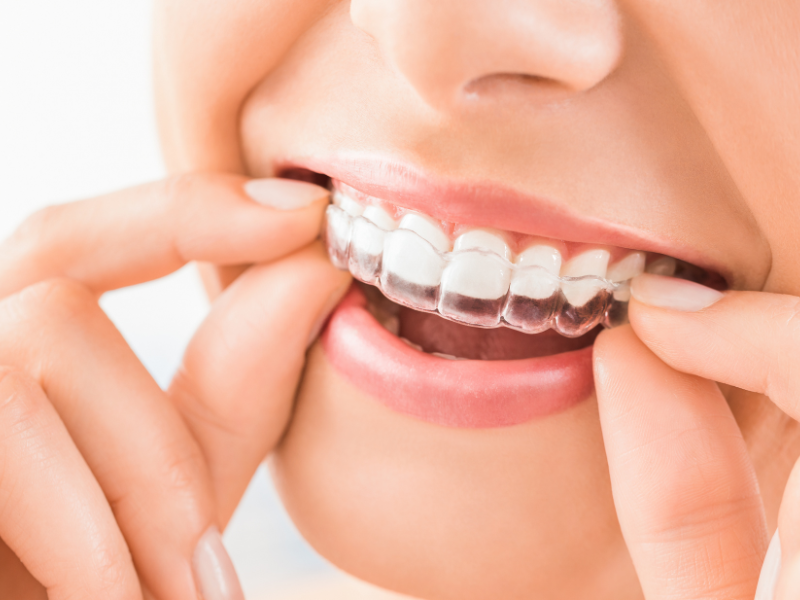
The Dental Concerns That Make Someone a Strong Invisalign Candidate
Invisalign is effective for a wider range of dental concerns than most people expect. It can correct mild to moderate crowding, close unwanted gaps between teeth, and address bite issues including overbites, underbites, crossbites, and open bites. If your teeth overlap, sit too far apart, or don’t meet properly when you bite down, Invisalign may be exactly what your smile needs.
That said, Invisalign works best for patients whose concerns fall within a mild to moderate range. Severe misalignment or complex bite problems may require traditional orthodontic treatment or a combination approach. The best way to know whether you’re a good candidate is through a proper clinical evaluation, one that looks at your teeth, jaw, and bite together rather than surface appearance alone. Most adults and teens who are unhappy with their smile alignment are surprised to find they qualify for Invisalign treatment.

Benefits of Invisalign
Invisalign changes how orthodontic treatment fits into daily life. It protects your speech, your schedule, your enamel, and your routine in ways traditional braces cannot. The panels below walk through five specific ways patients benefit from choosing Invisalign.
The Risks of Delaying Invisalign
If Invisalign is on your radar, it is normal to wonder what waiting would mean and what treatment involves. Putting off a straighter smile carries its own risks to your finances, your health, and your safety, and starting treatment raises fair questions of its own. Here is what each one looks like and how we help you handle it.
Financial Risk of Delaying Invisalign
Crowding, gaps, and bite concerns do not correct on their own, and waiting rarely makes treatment simpler or less costly. By the end of your first evaluation, you will have a clear picture of what treatment involves and what results you can realistically expect. During your consultation, your provider also gives you a precise cost breakdown, so there are no surprises before you commit. County Center Dental Group accepts most PPO plans and offers monthly payments through Cherry and CareCredit.
Health Risk of Waiting on Invisalign
Teeth that overlap or sit unevenly can be harder to keep clean, which can make daily care more work over time. Clear aligners can feel uncomfortable at times but are rarely painful, and the soreness most patients feel after switching to a new set typically peaks within the first 24 hours and fades on its own. Because there are no brackets or wires, the inside of your mouth stays irritation-free. You also take your aligners out to brush and floss, so your regular routine stays exactly the same.
Safety Risk of Putting Off Your Invisalign Evaluation
Putting off an evaluation can leave you guessing whether clear aligners fit your teeth, jaw, and bite, since severe misalignment or complex bite problems may need a different approach. Your treatment begins with a comprehensive evaluation by Dr. Khasraghi, who examines your teeth, gums, bite, and jaw alignment in detail to confirm that Invisalign is the right treatment for your specific concerns. Digital impressions feed a 3D treatment map that plots how your teeth will move at each stage, and you see a projection of your final results before your first aligner is made. Brief progress checks follow at scheduled intervals, so any adjustments are addressed early and your results stay on course.
Why Choose Us
County Center Dental Group combines clinical expertise with a genuine commitment to patient comfort. Dr. K is Invisalign certified and brings over two decades of experience in cosmetic and general dentistry to every appointment. She has been recognized as America’s Top Dentist and a Top Dentist by Northern Virginia Magazine, accolades that reflect not just her skill, but her dedication to delivering results that truly make a difference in people’s lives.
What sets this practice apart is the personal attention you receive at every step. Dr. Khasraghi takes the time to understand your specific concerns, explain your options clearly, and make sure you feel informed and comfortable throughout treatment. Advanced training through the Dawson Academy and the United States Dental Institute means you are getting care that reflects the latest techniques in the field, not a one-size-fits-all approach.


Schedule Our Invisalign Consultation
Our Invisalign consultations are led by Dr. Faranak Khasraghi, DDS, DMD, who brings dual dental degrees, advanced orthodontic training, and a national Top Dentist recognition to County Center Dental Group. If crooked teeth, gaps, or bite issues have been bothering you, this is a concrete, clinically proven way to fix them.
Visit County Center Dental Group on Facebook to learn more, then contact us today at 703.670.4888 to schedule your Invisalign consultation and start your path to the smile you’ve always wanted.
FAQs
How much is Invisalign?
Invisalign typically costs between $3,000 and $8,000 nationally, with the final number depending on how complex your case is and how long treatment runs. Dental insurance that covers orthodontics will often apply to Invisalign the same way it would to braces. During your consultation, your provider will give you a precise cost breakdown so there are no surprises before you commit.
How does Invisalign work?
Invisalign works by applying controlled, incremental pressure to specific teeth through a series of custom-fitted aligners, each one slightly different from the last. Every two weeks or so, you move to the next set, and your teeth follow. Unlike braces, which pull teeth using tension from wires, Invisalign pushes them using the exact contours of each aligner.
How long does Invisalign take?
Most Invisalign patients complete treatment between 12 and 18 months, though straightforward cases have wrapped up in as little as six. The timeline is largely determined by how far your teeth need to move and how consistently you wear your aligners each day. Wearing them fewer than 20 hours daily is the most common reason treatment runs longer than projected.
Can Invisalign fix overbite?
Invisalign can correct mild to moderate overbites by shifting the position of the upper teeth and improving how the upper and lower jaws align when you bite down. In some cases, small attachments bonded to the teeth are used to give the aligners more leverage for bite correction. Severe skeletal overbites, however, may require orthodontic or surgical intervention that goes beyond what aligners can achieve.
Does Invisalign hurt?
The honest answer is that Invisalign is uncomfortable at times, but rarely painful. The soreness most patients feel after switching to a new aligner set typically peaks within the first 24 hours and fades on its own. Because there are no brackets or wires, the inside of your mouth stays irritation-free, which is a meaningful difference from the experience most people associate with orthodontic treatment.